
R.I.P. Ted Turner
Heresiarch of the Cathode Age

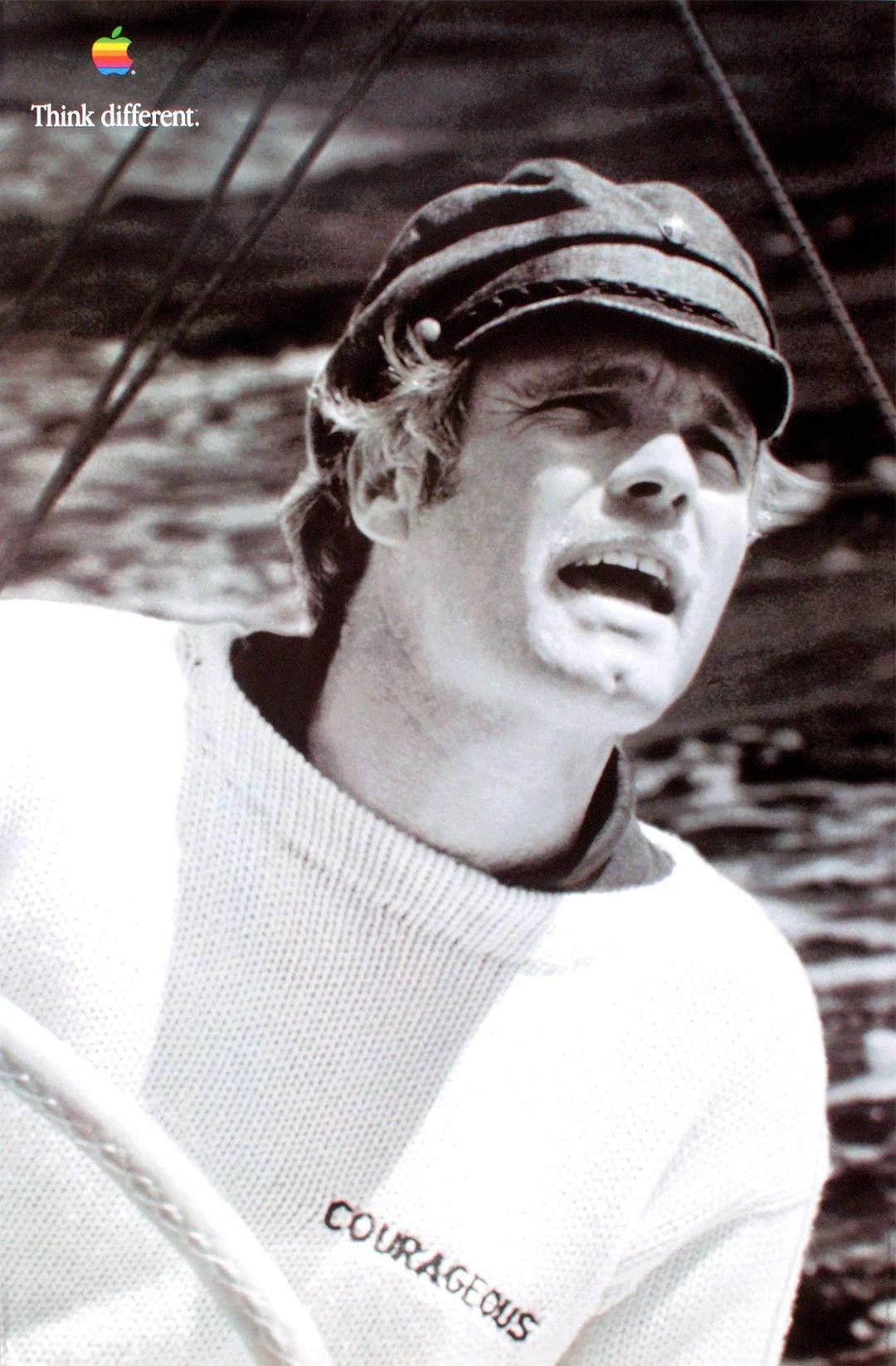
Ted Turner, who has died at 87, was one of those Americans whom Providence periodically manufactures in order to embarrass the orderly predictions of prudent men. He was vulgar, brave, prodigal, prophetic, sometimes preposterous, and very nearly always larger than the rooms into which he strode. The rooms, it should be added, kept getting larger.
He inherited not an empire but a billboard concern, which is to say a business devoted to the American genius for interrupting the horizon. From that comparatively modest patrimony he constructed a media dominion that altered not merely what Americans watched, but the metaphysical conditions under which they watched it. TBS, TNT, Turner Classic Movies, Cartoon Network, and, above all, CNN were not simply channels. They were apertures into a new dispensation: the abolition of waiting.
Before Turner, the news arrived ceremonially, like a bishop at vespers: at six-thirty, dressed in authority, and gone by seven. Turner, with the insolence of genius, asked why the world should be permitted to stop happening merely because the anchorman had gone home. CNN, launched in 1980, was received by many bien-pensants as a commercial eccentricity, a kind of electronic weather vane for insomniacs, cranks, and airline lounges. Then came the Gulf War, and suddenly the eccentricity had become the architecture. The planet had acquired a nervous system, and Ted Turner had leased it satellite time.
There was in him, as in so many Southern titans, a touch of the carnival barker and a touch of the Old Testament. He bought baseball teams, won the America’s Cup, married Jane Fonda, rescued Jane’s favorite the North American bison, divorced Jane, served bison at Ted’s Montana Grill, bought land in heroic quantities, donated sums that made lesser philanthropists look like parish treasurers, and spoke in sentences that seemed to have been assembled under sail in a thunderstorm. His enemies found him ridiculous; his admirers found him indispensable; both were frequently correct.
The conservative disposition is not ordinarily inclined to applaud men who accelerate history. Turner accelerated it with a boot on the throttle. Yet even his critics must concede that he possessed that rarest of entrepreneurial virtues: the ability to see, before the rest of us had finished adjusting the antenna, that the future had already arrived and was impatient with our consent. He did not merely exploit cable television. He taught it to shout.
His philanthropy, too, was Turnerian in scale and self-dramatizing sincerity. The $1 billion pledge that helped create the United Nations Foundation was less a donation than a cannon shot across the bow of complacent wealth. His work on nuclear nonproliferation, land conservation, and environmental causes testified to a man who, having spent his career multiplying signals, became preoccupied with survival itself.
He was not, let us be clear, a tidy man. Tidy men do not create CNN. Tidy men do not convert regional television into a planetary instrument. Tidy men do not become nouns in the private vocabulary of an age. Turner’s life was a refutation of tidiness: booming, errant, comic, wounded, imperial, generous, and occasionally ungovernable.
The final years brought illness, and the leonine figure receded from the medium he had done so much to inflame. But the world he made did not recede. It intensified. The continuous news cycle, now blamed for every civic malady short of gout, remains one of his monuments. It is fashionable to curse it; it is impossible to imagine modern public life without it.
Ted Turner leaves behind children, grandchildren, institutions, ranches, rescued species, altered industries, and a republic whose citizens now expect the whole world to be available before breakfast. Whether this was a blessing, a curse, or merely America being America at higher voltage will occupy moralists for some time.
Turner would probably have interrupted them.
Bravo! Perfect pitch - salutatory and reflective. And Heresiarch! wow!