
Peter Thiel Is Mostly Right About the Problem. He Is Wrong About Everything Else.
A Libertarian Case for Staying and Fighting


Introduction
In 2009, Peter Thiel published a short but bracing essay in Cato Unbound titled “The Education of a Libertarian.” It was not the usual libertarian lament about marginal tax rates or regulatory creep. It was something more fundamental. And, more unsettling. Thiel argued that freedom and democracy are no longer compatible, if indeed they ever were. The expansion of the franchise, the entrenchment of the welfare state, and the mathematics of majoritarian redistribution had, in his telling, rendered the libertarian political project structurally doomed.
The implication was stark: if democracy reliably produces illiberal outcomes, then the rational libertarian should cease attempting to win elections and instead pursue exit. Not reform, not persuasion, just exit. Cyberspace, seasteading, space colonization: the future of liberty lies beyond the reach of democratic majorities.
The essay was greeted with predictable outrage, much of it focused on Thiel’s impolitic remarks about women’s suffrage. That reaction, though understandable, was intellectually evasive. It permitted critics to dismiss the argument as provocation rather than engage its central claim: that democracy, as presently constituted, is a machine for expanding government, and that libertarians are foolish to imagine otherwise.
Here, one must concede something uncomfortable. Thiel has identified a genuine tension. The ratchet effect in democratic politics is real. Crises expand state power; normalcy rarely contracts it. Public choice theory has described, with clinical precision, the incentives that produce concentrated benefits and dispersed costs. The median voter theorem, in unequal societies, predicts persistent redistribution. These are not fantasies. They are structural features of democratic systems.
Thiel’s diagnosis of our situation is, in broad outline, correct. That said, his prescription is not merely wrong, it is philosophically unserious.
The Romance of Escape
There is a peculiar irony in Thiel’s posture. He presents himself as the flinty realist, the man who has peered into the abyss of democratic arithmetic and found it wanting. He is, in this self-portrait, the adult in the room (immune to civic lullabies about “the will of the people,” unpersuaded by sentimental hymns to majority rule. And yet, when the curtain rises on his proposed remedy) gleaming seasteads bobbing heroically beyond Leviathan’s grasp; one expects less Machiavelli than Marvel Studios. It is libertarianism rendered in IMAX: chrome, horizon lines, and the soothing hum of venture capital. One half expects a voiceover: In a world where ballots fail… one man dares to float.
To survey two and a half centuries of constitutional self-government (a system admittedly marred by folly, vice, compromise, and the occasional eruption of collective stupidity) and conclude that the proper response is to relocate civilization onto a maritime co-working space is not hard-headed realism. It is impatience elevated to metaphysics. The American constitutional order has survived civil war, depression, world war, stagflation, disco, and Congress. That it has not perfectly conformed to libertarian desiderata is hardly proof of its terminal uselessness. It is, rather, proof that free societies contain other people.
There is something unmistakably adolescent in the impulse. The teenage libertarian, having discovered both Hayek and Ayn Rand in the same semester, announces that he will henceforth withdraw to his room until the world recognizes the Non-Aggression Principle. The adult libertarian learns (sometimes reluctantly) that the world contains neighbors, zoning boards, school boards, and in-laws. Thiel’s seastead proposal feels less like Burkean prudence than a Silicon Valley version of “you can’t fire me, I quit.” The demos is intolerable; therefore, the demos must be abandoned. Exit, pursued by a yacht.
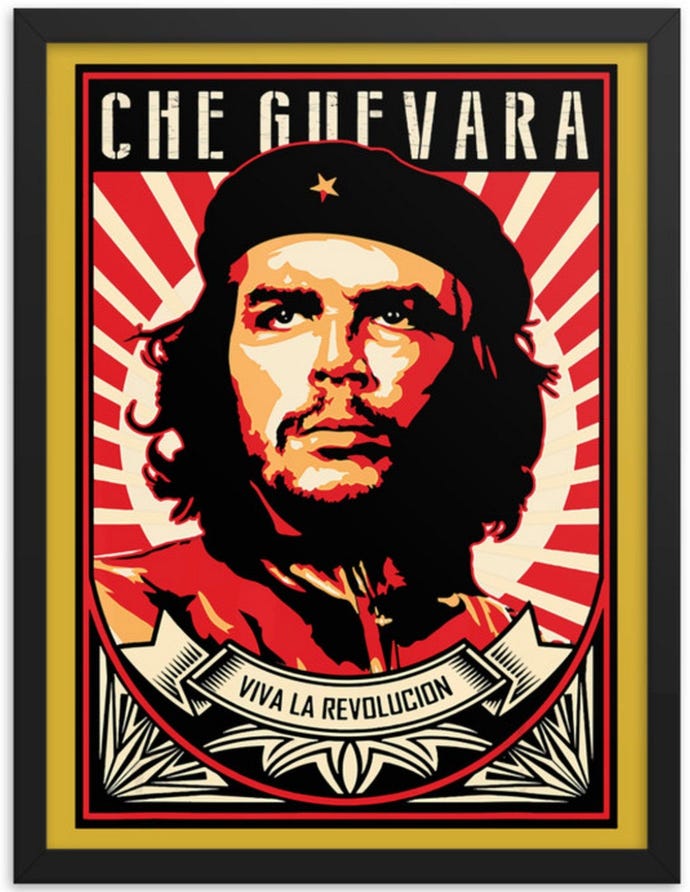
One hears, faintly but distinctly, the harmonies of ideological cousins. The Marxist, confronted with the dismal performance of “actually existing socialism,” assures us that the authentic article remains tragically unattempted. The technocrat, observing that human beings persist in behaving like human beings, proposes to update them. The seastead is simply the libertarian commune: purified, optimized, and aggressively beta-tested. It lacks only the Che Guevara posters and perhaps a kombucha tap in the common area. The promise is the same: this time, freed from the contamination of the unenlightened, the system will work flawlessly.
But the difficulty here is not merely that seawalls are expensive and storms uncooperative. It is not that maritime insurance underwriters are famously skeptical of utopian manifestos. The deeper problem is philosophical. A free society is not an engineering project to be rebooted when its user interface proves clunky. It is an inheritance. Complex, evolved, interwoven with habit and loyalty and compromise. To treat it as disposable the moment it fails to achieve theoretical purity is not realism. It is the refusal to accept that liberty, like adulthood, involves living with people who did not attend your seminar.
Politics as Aggregation; and, What That Leaves Out
Thiel’s account of democracy is, at bottom, an aggregative one. Politics, in this telling, is a glorified Costco: citizens wheel their carts of preference through the institutional aisles, form temporary purchasing alliances, and proceed to the checkout counter of public policy. The largest pile of receipts wins. Redistribution follows with the mechanical inevitability of a bulk discount. Liberty, somewhere between the frozen foods and the rotisserie chicken, is quietly marked down.
Now, there is something bracing about this account. It spares us the sentimental tableau of democracy as a town meeting bathed in golden light, where earnest citizens reason together under a Norman Rockwell sky. Public choice theory has, with admirable sobriety, reminded us that voters are not angels and legislators are not philosopher-kings. But to reduce democratic politics to nothing more than preference aggregation is rather like reducing marriage to the joint management of a checking account. It identifies a component and mistakes it for the whole.
The late Gerald Gaus, whose prose lacked the pyrotechnics of venture capitalism but possessed the rarer virtue of conceptual precision, insisted that the core problem of a free society is not who gets what, but what can be justified to whom. In The Order of Public Reason and The Open Society and Its Complexities, Gaus argues that legitimacy in a liberal order depends not on numerical dominance but on mutual justifiability among citizens understood as free and equal moral agents. These citizens may disagree about salvation, about sexuality, about the proper use of leisure time and the metaphysical status of kale. The fact of deep diversity is not a temporary inconvenience; it is the permanent condition of modernity.
Under this view, democratic politics is not merely a counting device but a justificatory tribunal. Laws are not legitimate because 51 percent prefer them; they are legitimate because they can be defended, in principle, to those who do not. The more diverse the citizenry (religiously, morally, philosophically) the thinner the set of coercive rules that can survive that test. Expansive moral legislation must clear an increasingly high bar, for it must answer not only to its admirers but to its skeptics. In such a society, the presumption tilts toward liberty not because voters are saints, but because disagreement is endemic.
This is not utopianism in academic dress. It is the recognition of a constraint imposed by pluralism itself. When citizens inhabit irreducibly different evaluative worlds, the state cannot simply baptize the majority’s moral vision and declare it universal (many a failed state has tried). It must tread carefully, aware that coercion without justification corrodes its own authority. Thiel’s median-voter pessimism overlooks this discipline. He treats diversity as raw material for redistribution; a demographic fuel source for Leviathan. Gaus treats diversity as a structural brake on coercion. That is not a quibble among professors; it is the difference between despairing of democracy and understanding why, under the right constitutional and cultural conditions, democracy may yet discipline itself.
The Epistemic Virtue of Diversity
The argument deepens (and becomes materially more uncomfortable for Mr. Thiel) when we turn to the work of Ryan Muldoon, particularly in Social Contract Theory for a Diverse World: Beyond Tolerance. Muldoon’s thesis is at once modest and devastating: diversity is not merely a social condition to be managed with gritted teeth; it is an epistemic asset. Heterogeneous societies, precisely because they contain clashing perspectives, rival ambitions, incompatible moral vocabularies, and citizens who insist on listening to different podcasts, are better at discovering workable social arrangements. Diversity, in short, is not a tax on liberalism. It is, in point of fact, its research and development department.
Muldoon’s point is not the gauzy bromide that “diversity is our strength,” usually uttered by corporate HR departments moments before mandating a team-building exercise. It is a far more bracing claim: that disagreement forces exploration. When citizens disagree deeply about what counts as success, they try different institutional arrangements. They probe the landscape. They discover local optima that no central designer (and certainly no ideologically purified enclave) would have anticipated. A diverse society behaves less like a marching band and more like a jazz ensemble: cacophonous at moments, yes, but capable of improvisational discovery unavailable to the strictly choreographed.
Homogeneous communities, by contrast, enjoy the great luxury of agreement; and, the grave danger that accompanies it. They converge quickly. They optimize efficiently. They nod vigorously in meetings. They produce white papers whose footnotes cite only one another. Internal coherence becomes a substitute for external validation. One can achieve astonishing unanimity when all dissenters have been screened out at the marina. The problem, as Muldoon would gently note and as experience would more bluntly confirm, is that such communities tend to mistake the absence of disagreement for the presence of truth.
Thiel’s exit communities are, by design, monocultures. They are populated by individuals who have already settled the first-order questions: about the scope of the state, the virtues of crypto, the moral status of zoning laws, and the proper interpretation of Hayek. Such communities may be efficient; indeed, they may be positively convivial. The cocktail parties will be delightful, if somewhat repetitive. But what they surrender is the epistemic friction that generates institutional learning. When everyone agrees on the fundamentals, exploration halts. The search space narrows. One has not transcended politics; one has curated it.
Democratic societies, maddening though they are, cannot afford this luxury. They are condemned (gloriously condemned I should add) to pluralism. They must contend with dissenters who vote differently, worship differently, and happen to think that your favorite economist is a menace. They are forced to negotiate among incompatible visions of the good life. The result is rarely elegant. It is frequently inelegant. Yet from this forced engagement emerge institutional arrangements that no single faction would have drafted in a moment of ideological purity but that endure precisely because they accommodate a range of perspectives. The compromise that no one loves often proves more durable than the blueprint everyone in the enclave adores.
This is not a malfunction of democracy. It is its central epistemic virtue. The seastead promises relief from the inconvenience of disagreement by abolishing the disagreeable. It dissolves the problem of diversity by dissolving diversity itself. In doing so, it forfeits the mechanism by which liberal societies correct their own errors. It becomes sleek, efficient; and, epistemically brittle. And brittle systems, however elegant their design renderings, do not age well. They do not adapt. They do not learn. They simply float, serenely self-assured, until reality arrives with weather.
They enter a condition where they are, long term, fucked.
Exit as Strategic Surrender
Let us grant (generously, even indulgently) that democratic institutions are failing in important respects. That Congress resembles less a deliberative body than a performance art collective. That bureaucracies metastasize with a biological enthusiasm that would impress oncology. That the administrative state occasionally reads the Constitution as one reads a vintage wine label: interesting, decorative, and not binding. These are not hallucinations. They are observable phenomena. One need not be a seasteader to notice that the machinery of self-government sometimes grinds with the elegance of a shopping cart with one stubborn wheel.
But does it follow that one should leave?
The libertarian who exits democratic politics does not thereby escape the ratchet effect; he oils it. Political vacuums are rarely filled by angels clutching pocket Constitutions. If those most committed to liberty withdraw from civic engagement, they do not punish the system; they relieve it of opposition. One cannot lament the trajectory of the demos while decamping from it. To abandon the arena and then complain about the referees is less a strategy than a sulk.
There is, to be sure, a bracing clarity in admitting defeat. It possesses the clean lines of a well-designed slide deck: “Democracy is broken. Therefore, we pivot to floating sovereignty.” The narrative arc is crisp. The diagnosis is bold. The exit is elegant. But clarity is not courage. Courage consists in remaining where the argument is difficult, where the votes are uncertain, where persuasion requires more than a term sheet and a manifesto.
Liberty has never been preserved by flight. It has been preserved (when it has been preserved) by argument, persuasion, institutional reform, and the slow, untheatrical accumulation of cultural capital. These are not glamorous activities. They do not trend on social media. They do not produce venture-scale returns or hockey-stick graphs. They involve school board meetings, op-eds, think tanks, awkward Thanksgiving debates, and the occasional Supreme Court brief. They require patience; that most unfashionable of virtues, particularly in a culture accustomed to pushing updates overnight.
The libertarian who believes in spontaneous order should, of all people, resist the temptation to scrap evolved institutions in favor of engineered replacements. Markets work, we are told, because they harness dispersed knowledge accumulated over time. Yet when it comes to constitutional democracy (an institution refined through centuries of conflict, compromise, and correction) some libertarians suddenly acquire the temperament of a product manager who has decided the legacy system must be sunsetted by Q3. One imagines Edmund Burke wandering through Palo Alto, gazing at the renderings of a sovereign archipelago with renewable energy and artisanal governance, and arching a skeptical eyebrow. “You propose,” he might inquire gently, “to improve upon a civilization with a Series A?”
The defects of democracy are real. So is its resilience. If one believes that free institutions emerge from contestation and error-correction, then the appropriate response to institutional decay is not abandonment but renovation. Not escape, but engagement. The demos is not an app to be deleted when buggy. It is an inheritance to be stewarded; irritations and all.
Temperament and the Gnostic Temptation
There is, finally, a question not of theory but of temperament — and temperament, as history repeatedly demonstrates, is destiny wearing casual clothes.
Libertarianism, at its best, is animated by a kind of audacious confidence in ordinary people. It begins with the scandalous proposition that the butcher, the baker, and even the occasional zoning commissioner, left broadly free, will coordinate their affairs more intelligently than a committee of experts fortified by white papers and catered lunches. It is an optimistic creed, not naïve, but hopeful. It assumes that persuasion works, that norms evolve, that voluntary cooperation is not a fairy tale but a daily occurrence. The libertarian tradition, from Friedrich Hayek to Milton Friedman, rests on the belief that dispersed knowledge and decentralized choice produce emergent orders superior to any master plan. It is, at root, a vote of confidence in the cognitive and moral capacities of one’s fellow citizens.
Thiel’s essay, by contrast, radiates something cooler, sharper, and far less generous. Beneath the analytic severity lies a weary contempt for the electorate: the suggestion that the masses, having been entrusted with the franchise, have predictably squandered it. The demos is not misguided but structurally incorrigible. The only rational course is to gather the enlightened and withdraw. It is libertarianism with the lights dimmed and the drawbridge raised.
One hesitates to employ theological language in policy disputes, but the resemblance to gnosticism is difficult to ignore. The gnostics of antiquity believed that salvation was reserved for those who possessed special knowledge. The many, by contrast, were trapped in illusion; the few would escape. Replace “salvation” with “sovereignty” and “illumination” with “exit,” and the parallel becomes awkwardly apt. The seastead is not merely a jurisdictional innovation; it is a sanctuary for the initiated. The rest may continue their muddled democratic experiment; the elect will repair to higher ground. Or, at least, to international waters.
But a free society does not run on exit. It runs on persuasion. It depends on the stubborn belief that one’s fellow citizens are not irredeemable adversaries but potential interlocutors; that they can be argued with, reasoned with, occasionally even convinced. To engage in politics is to assume that minds can change and that coalitions can shift. To abandon persuasion is to concede that the argument is unwinnable, that one’s countrymen are beyond reach, that self-government is a charming but terminal experiment.
And here the irony becomes complete. Libertarianism, properly understood, is a doctrine of faith in human agency. It trusts people to choose, to learn, to adapt. To retreat into enclaves because the electorate has disappointed you is not realism; it is a failure of nerve. The liberal project (the project of free and equal citizens governing themselves despite profound disagreement) cannot survive without the discipline of argument. If you withdraw from that discipline, you have not refined libertarianism. You have forfeited it.
Conclusion: Sticking With the Difficult Miracle
Self-government among free and radically different people is not a dinner party; it is a perpetual negotiation conducted in a room where no one agrees on the menu and half the guests object to the cutlery. It is noisy. It is compromised. It produces legislation that reads like it was written by a committee; because, regrettably, it was. It expands in panic, contracts in regret, errs in enthusiasm, corrects in embarrassment. It disappoints conservatives, frustrates libertarians, and occasionally vindicates neither.
All of which makes it, historically speaking, nothing short of miraculous.
That such a contraption (populated by citizens who worship different gods, read different books, vote for different parties, and insist on different definitions of justice) has managed to sustain both liberty and prosperity for centuries is not evidence of its futility. It is evidence of its resilience. The American experiment is not a pristine algorithm. It is a bruised, argumentative inheritance. And yet it works. Not flawlessly, not finally, but sufficiently. That is a higher praise than perfection, which has the irritating habit of existing only in brochures.
The libertarian task, therefore, is not to flee the demos but to engage it. To step into the arena armed not with blueprints for offshore sovereignty but with arguments. To make the case, repeatedly and without melodrama, that limited government is not merely efficient but just; that freedom is not merely productive but dignifying; that diversity of ends is not a software bug but the defining feature of moral agency. One does not defend liberty by escaping those who disagree. One defends it by persuading them.
Thiel is right that democracy contains structural pressures. He is right that majorities can be shortsighted, that bureaucracies can calcify, that redistribution has a stubborn constituency. But he is wrong to conclude that these pressures are destiny. And he is dangerously wrong to suggest that liberty flourishes best in curated enclaves of the already converted. A homogeneous archipelago of the like-minded may be tranquil. It will not be free in the full and bracing sense that freedom requires — freedom tested by dissent, sharpened by opposition, and legitimated by argument.
The libertarian who truly believes in freedom does not retreat to the sea like a Roman senator disgusted with the mob. He remains in the republic, sleeves rolled, rhetoric polished, patience fortified.
They stay.
They argue.
They persuade.
And, most radical of all, they trust that their fellow citizens are not beyond reason.
For if liberty depends on anything, it depends on that faith: that in a society still capable of hearing arguments, the better one will, in time, win.